

Apple iPhone 17 Review: The Best iPhone for Most People in 2026
Apple iPhone 17 in-depth review: testing the 6.3" ProMotion display, A19 chip performance, 48MP Dual Fusion cameras, and 40W charging. Is this the best $799 flagship phone in 2026?
REVIEWS (PRODUTOS)
5/5/202611 min read
The Apple iPhone 17 lands in 2026 with a clear mission: to be the best phone for most people. After weeks of testing, that's exactly what it is. Apple has dramatically narrowed the gap between its baseline model and the pricier Pro counterparts, giving the standard iPhone 17 the kind of features—120Hz ProMotion display, 48MP Dual Fusion cameras, and the powerful A19 chip—that were once reserved for $1,100-and-up devices.
With a starting price of $799, double the base storage of its predecessor at 256GB, and the full suite of Apple Intelligence features, the iPhone 17 doesn't just iterate. It redefines what a "base model" iPhone can be.
CNET scored it a 9.1 out of 10, calling it the phone that "shares many of the same camera features with the pricier 17 Pro models, but at a lower $829 starting price". Across the Atlantic, Tech Advisor described it as "the outstanding candidate, both now and well into the future—one of the very few flagship phones that we can wholeheartedly recommend to almost anyone".
Design and Build: Familiar, Refined, and Tougher Than Ever
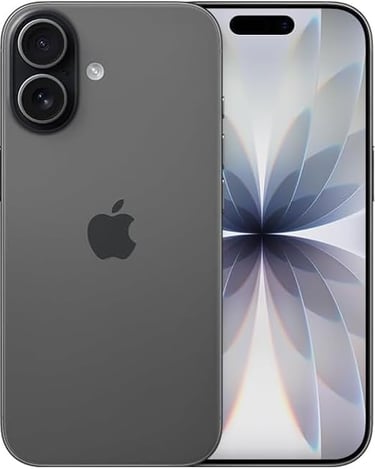
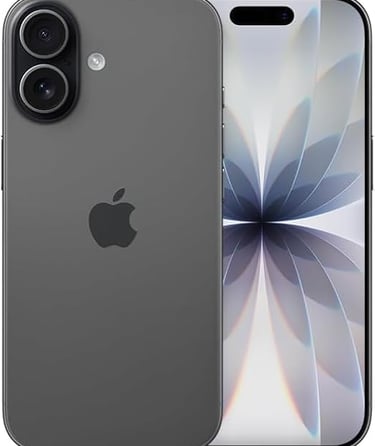
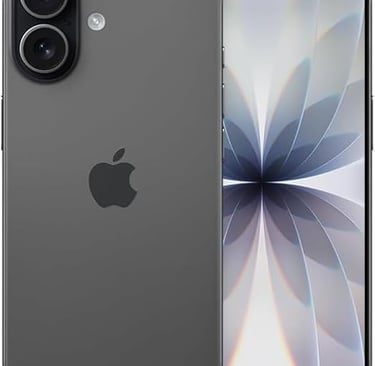
The iPhone 17 doesn't reinvent the wheel aesthetically, and that's fine. It retains the flat-edge aluminum design that Apple introduced years ago, but refines it with slightly slimmer bezels, a larger 6.3-inch display (up from 6.1 inches), and the new Ceramic Shield 2 glass that Apple claims is three times more scratch-resistant than the previous generation
Specification iPhone 17
Dimensions 149.6 x 71.5 x 7.95mm
Weight 177 grams (6.24 ounces)
Frame Material Aluminum
Front Protection Ceramic Shield 2
Back Color-infused glass
Water Resistance IP68 (6 meters, 30 minutes)
Colors Black, White, Mist Blue, Sage, Lavender
At 177 grams, the iPhone 17 is noticeably lighter than the Galaxy S26 (which weighs 167g in its compact form, but the iPhone still feels substantial and premium in hand). The color-infused glass back is available in five understated colors—black, white, mist blue, sage, and lavender—each with a soft, matte finish that resists fingerprints well.
The IP68 rating means it can survive submersion in up to 6 meters of fresh water for 30 minutes, matching the best in the industry.
Design verdict: Classic iPhone aesthetics with meaningful durability improvements. The Ceramic Shield 2 glass and reduced glare from the anti-reflective coating are genuine quality-of-life upgrades.
Display: ProMotion Finally Comes to the Standard iPhone
For years, the lack of a high-refresh-rate display on the standard iPhone was a glaring omission. With the iPhone 17, Apple has corrected that. The 6.3-inch Super Retina XDR OLED display now features ProMotion technology with adaptive refresh rates up to 120Hz, just like the Pro models.
The display specifications are impressive:
2622-by-1206-pixel resolution at 460 ppi
Peak outdoor brightness: 3,000 nits
Peak HDR brightness: 1,600 nits
Typical brightness: 1,000 nits
Minimum brightness: 1 nit
The jump to 3,000 nits of peak outdoor brightness is substantial—double the 2,000 nits of the previous generation—and makes outdoor readability flawless even under direct sunlight. The 7-layer anti-reflective coating on the Ceramic Shield 2 glass further reduces glare, matching or exceeding what Samsung has done with its Galaxy S26 series.
Always-On display functionality is now enabled thanks to the ProMotion display, which can dial down to 1Hz when not actively in use. This means you can glance at widgets, time, and Live Activities without waking the phone—a small but genuinely useful feature that the base iPhone has lacked until now.
Dynamic Island also remains, providing a clever way to surface information like incoming rides, food deliveries, and music playback in a visually pleasing way.
Display verdict: The 120Hz ProMotion display is the single biggest reason to choose the iPhone 17 over older models. It transforms the daily experience, making scrolling buttery smooth, gaming more responsive, and the Always-On display a practical tool.
Performance: A19 Chip Delivers Flagship Power
At the heart of the iPhone 17 is Apple's A19 chip, built on a third-generation 3-nanometer process. The chip features a 6-core CPU (2 performance cores + 4 efficiency cores), a 5-core GPU with Neural Accelerators, and a 16-core Neural Engine.
Apple says the CPU is 1.5 times faster than the A15 Bionic in the iPhone 13, while the GPU is more than twice as fast. In real-world use, the iPhone 17 handles everything thrown at it with ease—from intensive gaming with hardware-accelerated ray tracing to multitasking across dozens of apps.
Benchmark results and performance notes:
The A19 chip provides a significant improvement over the previous-generation A18, particularly in graphics-intensive tasks
8GB of RAM (up from 6GB in the iPhone 16) enables smooth multitasking and supports the full Apple Intelligence suite
Hardware-accelerated ray tracing improves gaming visuals significantly
The iPhone 17 also introduces Apple's new N1 wireless chip, which enables Wi-Fi 7 and Bluetooth 6 connectivity—bringing faster wireless speeds and improved reliability for AirDrop and personal hotspot features.
Performance verdict: The A19 chip and 8GB of RAM deliver flagship-level performance that will keep the iPhone 17 feeling fast and capable for years to come.
Apple Intelligence: AI That Respects Your Privacy
The iPhone 17 runs iOS 26 with full Apple Intelligence support. Apple's approach to AI is more conservative than competitors like Samsung and Google, but it focuses on privacy and on-device processing that many users appreciate.
Key Apple Intelligence features include:
Live Translation: Real-time text and audio translation across supported languages
Writing Tools: AI-assisted proofreading, summarization, and tone adjustment available system-wide
Photo Clean Up: Remove distracting objects from photos (though this feature is, admittedly, less polished than Google's Magic Eraser)
Visual Intelligence: Point the camera at objects, text, or landmarks to get instant information and search results, reportedly one of the most popular Apple Intelligence features
Call Screening: AI-powered call filtering and prioritization
Apple's AI processing happens primarily on-device via Private Cloud Compute, meaning your data is not logged or accessible to Apple. For privacy-conscious users, this is a significant advantage over the more cloud-dependent AI implementations on Android phones.
However, it's worth noting the criticism. As one reviewer put it, "Apple Intelligence can still feel like a work in progress". The upcoming iOS 27 update is expected to add more advanced AI photo features like Enhance, Reframe, and Extend tools.
AI verdict: Apple Intelligence is useful and privacy-focused, but it's playing catch-up to Google's Gemini and Samsung's Galaxy AI in terms of feature breadth.
Camera System: The "Dual Fusion" Leap Forward
The camera system is where the iPhone 17 makes its most significant hardware leap. For the first time, all rear cameras on the base iPhone are 48MP—a major upgrade that brings the standard model much closer to the Pro experience.
Full camera specifications:
Camera Resolution Aperture Key Feature
Main (Fusion) 48MP f/1.6 Sensor-shift OIS, 2x optical-quality zoom, 100% Focus Pixels
Ultra-Wide 48MP f/2.2120° field of view, Hybrid Focus Pixels, macro photography
Front (Center Stage) 18MP — Square sensor, landscape/portrait selfies without rotation
The 48MP Fusion Main camera now includes an integrated optical-quality 2x telephoto, effectively giving the iPhone 17 a 4x optical zoom range (2x optical zoom in, 2x optical zoom out). This is a clever solution that delivers genuine telephoto versatility without requiring a separate lens.
The sensor-shift optical image stabilization and 100% Focus Pixels mean autofocus is fast and accurate, even in challenging lighting. Daylight photos are crisp with excellent detail preservation, and the wider f/1.6 aperture helps in low-light situations.
The new 48MP Fusion Ultra-Wide camera captures up to 4x the resolution of the previous generation. This is immediately noticeable in landscape shots and group photos, where detail is significantly improved. It also enables macro photography, letting you get close-up shots with impressive clarity.
The Center Stage front camera is the most innovative change. It features the first square front camera sensor on an iPhone, with an 18MP resolution for photos and the ability to capture both landscape and portrait selfies without rotating the phone. The feature uses AI to automatically expand the field of view for group shots, ensuring everyone fits in frame.
For video calls, Center Stage keeps you positioned and stable in the frame. The front camera also supports ultra-stabilized 4K HDR video recording, and the new Dual Capture feature lets you record from both the front and rear cameras simultaneously—perfect for vloggers and content creators.
Video recording capabilities include:
4K Dolby Vision at up to 60 fps
Cinematic mode up to 4K Dolby Vision at 30 fps
Action mode up to 2.8K at 60 fps
Spatial video recording for Apple Vision Pro
Camera verdict: The all-48MP rear camera system and the innovative Center Stage front camera represent the biggest generational leap for a base iPhone in years. For the vast majority of users, the iPhone 17's camera system is more than capable enough—you only need the Pro if you specifically require the dedicated telephoto lens.
Battery Life and Charging: Meaningful Improvements
Battery life has always been a strong point for iPhones, and the iPhone 17 continues that tradition. Apple claims up to 30 hours of video playback (non-streaming) and up to 27 hours of streaming. In real-world mixed usage, the phone easily lasts a full day with room to spare.
However, independent testing reveals more nuanced results. In a continuous video playback test with screen brightness set to maximum and volume at 50%, the iPhone 17's battery lasted 12 hours and 31 minutes—less than the iPhone Air (15 hours 5 minutes) and the iPhone 17 Pro (15 hours 41 minutes). This suggests that while Apple's official figures are optimistic, the real-world mixed usage experience is still reliable for daily needs.
Charging speeds see a welcome boost this year. The iPhone 17 supports up to 40W wired charging, capable of reaching 39% in 15 minutes and 71% in 30 minutes using Apple's 40W power adapter (sold separately). Apple's official claim is 50% in 20 minutes with a 40W or higher adapter.
Wireless charging supports MagSafe at up to 25W, with the phone reaching 50% in approximately 30 minutes via MagSafe. Qi2 wireless charging is also supported at 25W.
While competitors like the POCO X8 Pro offer 100W charging, Apple's approach emphasizes battery longevity and thermal management over raw speed. For most users, the 40W wired charging is a significant and welcome upgrade from previous generations.
Battery verdict: All-day battery life is consistent and reliable. The faster 40W wired charging and 25W MagSafe are meaningful improvements, even if they don't match the highest charging speeds in the Android world.
Full Specifications
CategoryApple iPhone 17
Display 6.3" Super Retina XDR OLED, 2622x1206, 460 ppi, 1-120Hz ProMotion, 3,000 nits peak
Chip A19 (3nm), 6-core CPU, 5-core GPU, 16-core Neural Engine
RAM 8GB
Storage 256GB / 512GB
Rear Cameras 48MP Main (f/1.6, sensor-shift OIS) + 48MP Ultra-Wide (f/2.2, 120°)
Front Camera 18MP Center Stage (square sensor, Dual Capture)
Video 4K Dolby Vision 60fps, Cinematic Mode 4K30, Action Mode 2.8K60
Battery Up to 30h video playback, 27h streaming
Charging 40W wired (50% in 20 min), 25W MagSafe/Qi2 wireless
OS iOS 26 with Apple Intelligence
Build Aluminum frame, Ceramic Shield 2, IP68
Dimensions 149.6 x 71.5 x 7.95mm, 177g
Connectivity 5G, Wi-Fi 7, Bluetooth 6, Thread, USB-C (USB 2 speeds)
Starting Price $799 (256GB)
iPhone 17 vs. the Competition
Feature iPhone 17 Samsung Galaxy S26 Which Wins?
Display 6.3" OLED, 120Hz ProMotion, 3,000 nits 6.3" Dynamic AMOLED 2X, 120Hz, 2,600 nits iPhone (brighter)
Processor A19 (3nm) Snapdragon 8 Elite Gen 5 Samsung (more RAM:12GBvs8GB)
Main Camera 48MP (f/1.6) Dual Fusion 50MP (f/1.8) iPhone (wider aperture)
Ultra-Wide Camera 48MP (f/2.2) 12MP iPhone
Telephoto 2x optical-quality (integrated) 3x optical (dedicated) Samsung
Battery Up to 30h video playback 4,300 mAh iPhone (better efficiency)
Charging 40W wired, 25W MagSafe 45W wired, 15W wireless Tie
Storage 256GB base, 512GB max 256GB base, up to 1TB Samsung
OS Updates ~6-7 years (typical Apple support) 7 years guaranteed Samsung
Weight 177g 167g Samsung (lighter)
Price $799 (256GB) ~$750 Samsung (cheaper)
The competition between the iPhone 17 and the Galaxy S26 is remarkably close in 2026. The Galaxy S26 offers more RAM (12GB vs 8GB), a dedicated 3x telephoto lens, and a lower price point, while the iPhone 17 counters with a brighter 3,000-nit display, superior ultra-wide camera, better battery efficiency, and the privacy-focused Apple Intelligence ecosystem. As one French comparison concluded, "The Galaxy S26 wins this duel 5-1, establishing itself as a more complete, more versatile, and more rational smartphone. Without being a revolution". However, for users already embedded in the Apple ecosystem, the iPhone 17's seamless integration with AirPods, Apple Watch, Mac, and iPad remains an unmatched advantage that no Android phone can replicate.
Frequently Asked Questions
Does the iPhone 17 finally have a 120Hz display?
Yes. The iPhone 17 features ProMotion technology with adaptive refresh rates from 1Hz to 120Hz, matching what was previously only available on Pro models. It also enables the Always-On display.
What's the difference between the iPhone 17 and the iPhone 17 Pro?
The Pro model adds a dedicated 5x telephoto lens, a faster A19 Pro chip with 6-core GPU, up to 1TB storage, a titanium frame, and slightly better battery life. For most users, the standard iPhone 17 offers the more sensible value.
Does the iPhone 17 have Apple Intelligence?
Yes. The A19 chip with its 16-core Neural Engine runs the full Apple Intelligence suite, including Writing Tools, Photo Clean Up, Live Translation, and Visual Intelligence, all with on-device privacy protections.
Is the iPhone 17 waterproof?
The iPhone 17 has an IP68 rating, meaning it can withstand submersion in up to 6 meters of fresh water for up to 30 minutes.
Does the iPhone 17 come with a charger?
No. Apple does not include a charging brick in the box—only a USB-C to USB-C cable. You'll need to use an existing charger or purchase one separately. To achieve the 50% in 20 minutes fast-charging speed, a 40W or higher USB-C power adapter is required.
What is the current price of the iPhone 17?
The official US starting price is 799forthe256GBmodel.Someretailerslistitat799forthe256GBmodel.Someretailerslistitat829, with carrier activation discounts bringing it back to $799. The 512GB version is also available for those who need more storage.
How many years of updates will the iPhone 17 get?
Apple typically supports iPhones for 6-7 years with major iOS updates. Given the iPhone 17 shipped with iOS 26, it should continue receiving updates well into the 2030s.
Verdict: Is the iPhone 17 Worth It?
Absolutely. Rating: 4.5/5
The iPhone 17 is the finest all-round smartphone money can buy in 2026. As a six-month review concluded, "After six months, the iPhone 17 remains the finest all-round smartphone money can buy. It is the finest iPhone in years, and after six months with it, one does rather find oneself wondering whatever happened to Android".
What makes the iPhone 17 special isn't just the 120Hz ProMotion display that finally arrived, or the all-48MP camera system, or the faster 40W charging. It's how all these refinements come together to deliver an iPhone that doesn't force you to choose between price and premium features. For $799, you get a display that matches the Pro, cameras that cover every shooting scenario, the full Apple Intelligence suite, and the legendary Apple ecosystem integration that no Android competitor can match.
The compromises are minimal: no dedicated telephoto lens (the 2x optical-quality integrated zoom compensates well), USB-C still at USB 2 speeds (a frustration for those who transfer large files via cable), and charging that, while improved, still lags behind the fastest Android competitors.
But for the overwhelming majority of people, the iPhone 17 is the sweet spot in Apple's 2026 lineup. It delivers everything most users need and nothing they don't—at a price that makes the $1,100+ Pro models feel indulgent rather than essential.
If you're upgrading from an iPhone 14 or older, the iPhone 17 will feel transformative. If you're an Android user considering a switch, the combination of the 120Hz display, mature Apple Intelligence features, and the seamless ecosystem makes this the most compelling entry point in years.
Pros:
✅ Stunning 120Hz ProMotion display with 3,000 nits peak brightness
✅ A19 chip delivers flagship performance with excellent efficiency
✅ All-48MP rear camera system is a genuine generational leap
✅ Innovative Center Stage front camera with Dual Capture recording
✅ 256GB base storage (double the previous generation)
✅ Faster 40W wired charging and 25W MagSafe
✅ Full Apple Intelligence suite with on-device privacy
✅ Legendary build quality with Ceramic Shield 2 and anti-reflective coating
Cons:
❌ No dedicated telephoto lens (relying on integrated 2x optical-quality zoom)
❌ USB-C port limited to USB 2 speeds
❌ No charger included in the box
❌ Apple Intelligence still feels like a work in progress
❌ Base storage increased, but physical design remains largely unchanged
Where to Buy the iPhone 17 at the Best Price
Current deals available in the US (verified May 2026):